
From Design to Installation: A Hands-On Journey in FDRE Technical Institute in Addis Ababa-Ethiopia

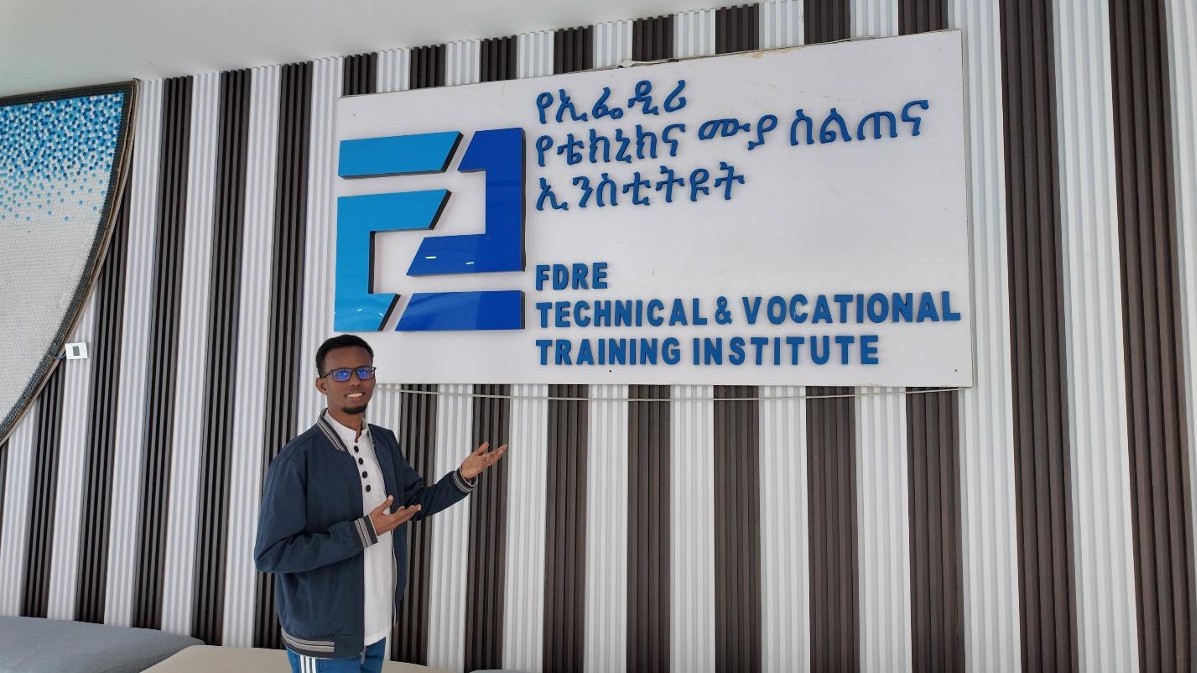
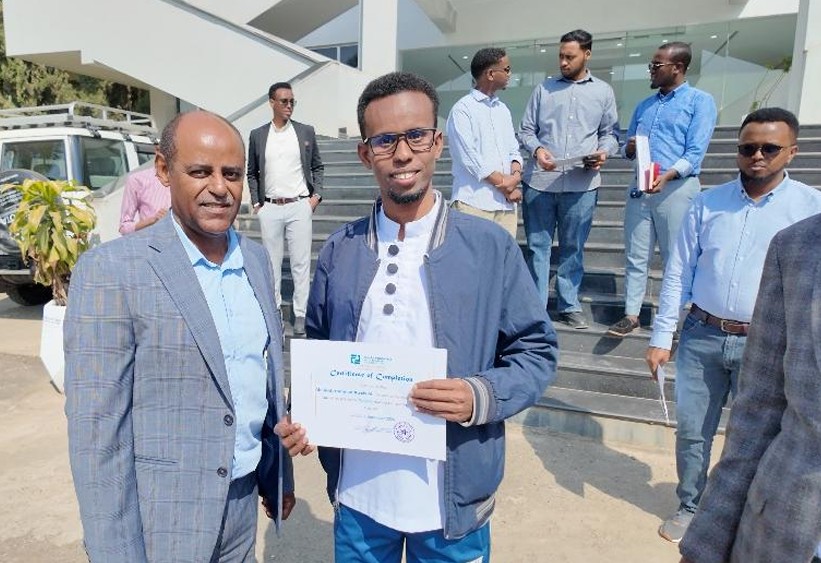
Hello; My name is Abdurrahman Aweis, and I recently completed a 21-day on-field practical plumbing and sanitary training at the FDRE TVET Institute in Addis Ababa, Ethiopia, as part of a master trainer programme supported by GSA. This blog shares what was learned in the workshop and computer lab, from basic tools and safety to full system design, installation, and documentation, along with a final project that connects clean water supply, wastewater management, and sustainable reuse within one training facility. A short video is attached below the blog for readers who want to see the actual workshop activities and final setup in more detail.
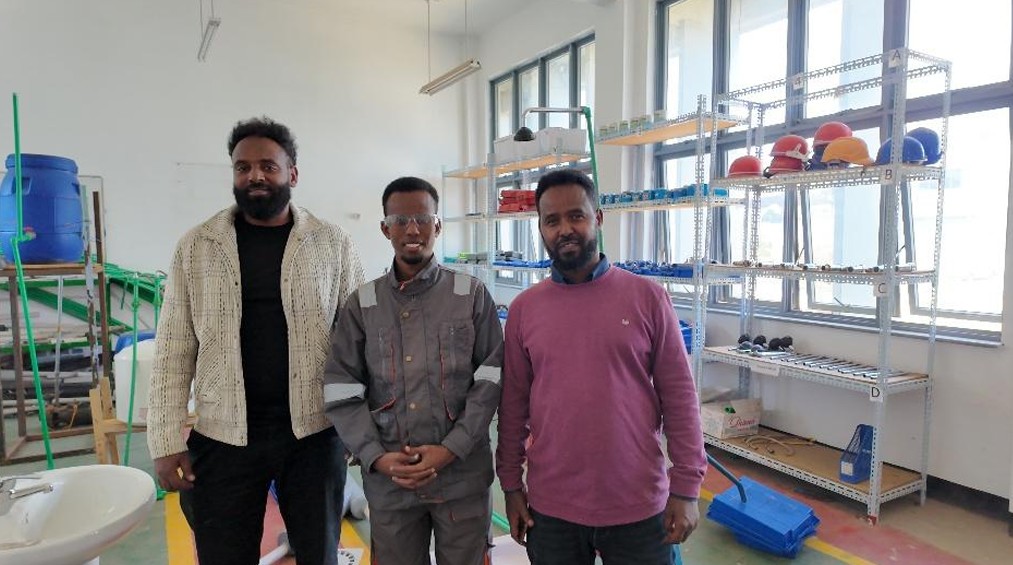
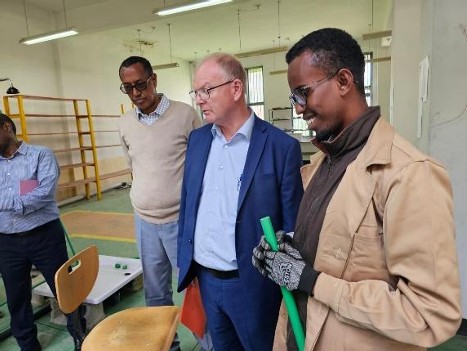
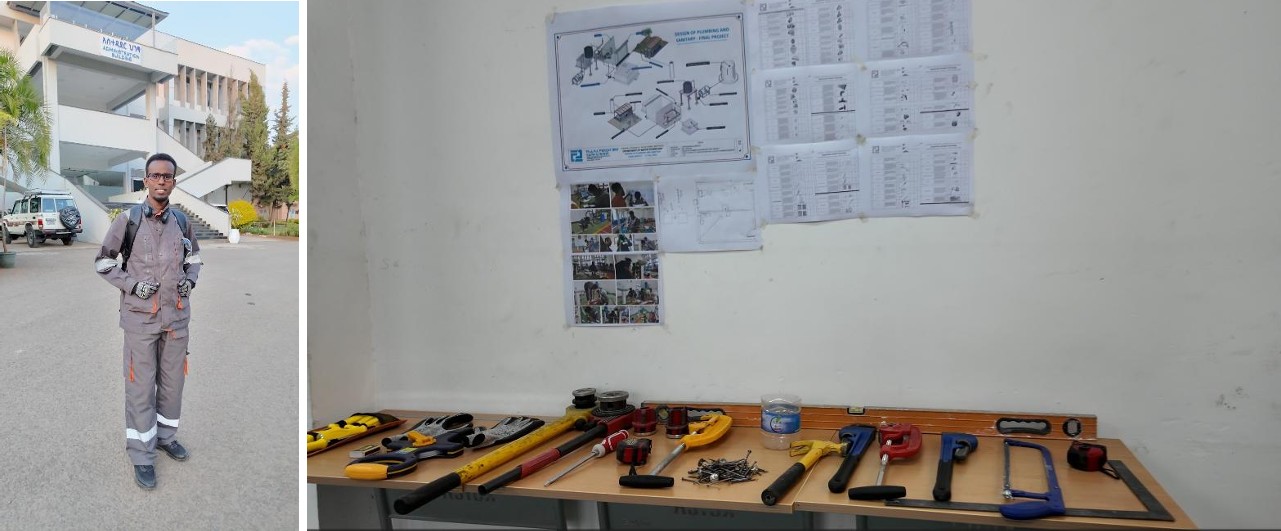
Plumbing Tools And Materials
During the first days, the focus was on identifying, handling, and maintaining common plumbing tools and materials used in modern water supply and sanitary systems. Trainees worked with measuring tools (tape, spirit level, plumb bob), cutting tools (hacksaw, pipe cutter), threading and joining tools, as well as a range of materials such as PPR, HDPE, GI, PVC, and uPVC pipes and fittings in different diameters. Basic care, safe storage, and correct selection of tools for each task were emphasized to reduce waste and avoid damage to pipes and fixtures.
Designing The Final Project in SketchUp
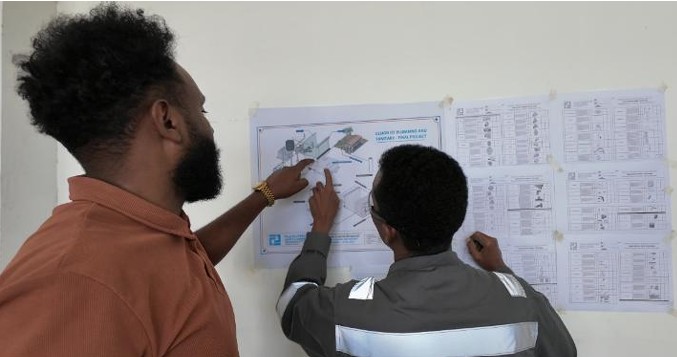
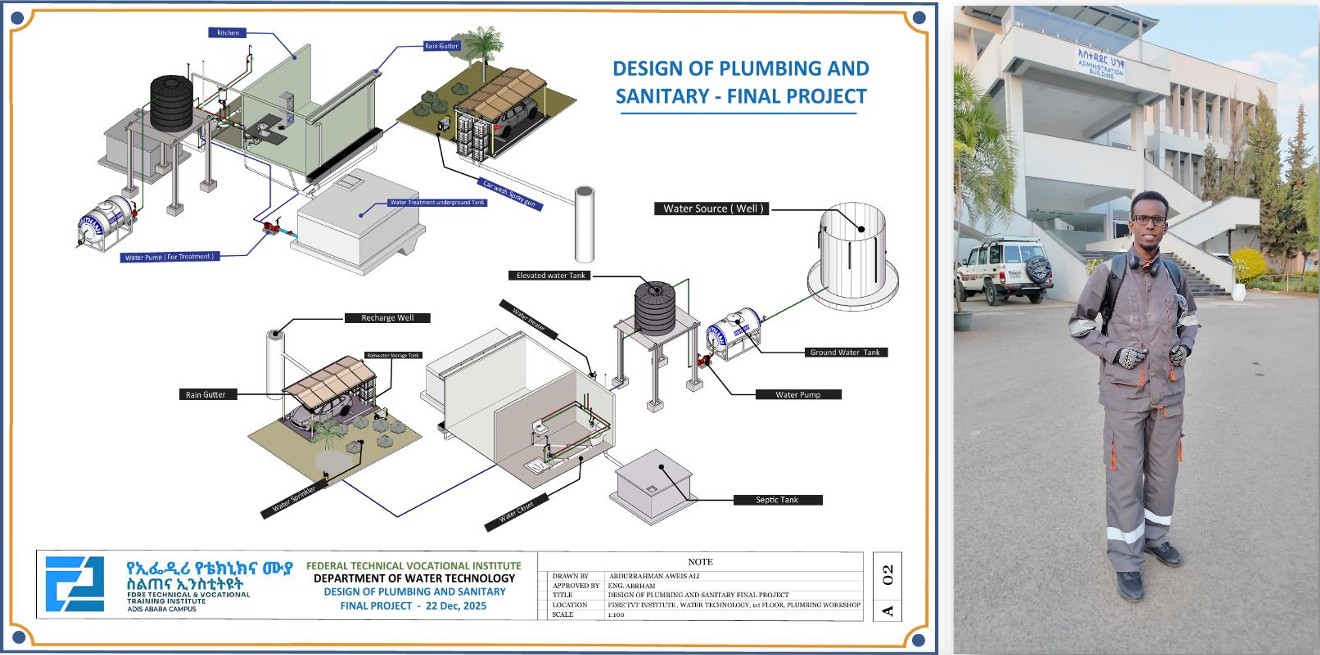
The final project started on the computer, where the plumbing and sanitary layout was modeled using SketchUp Pro to create a clear 3D view of the building and its pipe networks. The design included water source tanks, distribution lines for hot and cold water, vertical risers, branch lines to fixtures, as well as separate drainage and greywater lines leading to treatment and reuse units. Pipe sizes, slopes, and fixture locations were planned in the model first, so that the workshop installation could closely follow the drawing like a real project with coordinated BoQ and site work.
Health And Safety in Plumbing Work
Throughout the training, health and safety were treated as a core part of professional plumbing practice, not as an optional topic. Trainees learned to use personal protective equipment such as safety boots, overalls, gloves, and eye protection, to keep the work area dry and uncluttered, and to respect basic rules about electricity, ladders, chemical handling, and confined spaces. Reporting faulty tools, switching off machines after use, and maintaining good housekeeping in the workshop were repeated and enforced during daily activities.
Installation of PPR Hot and Cold Supply
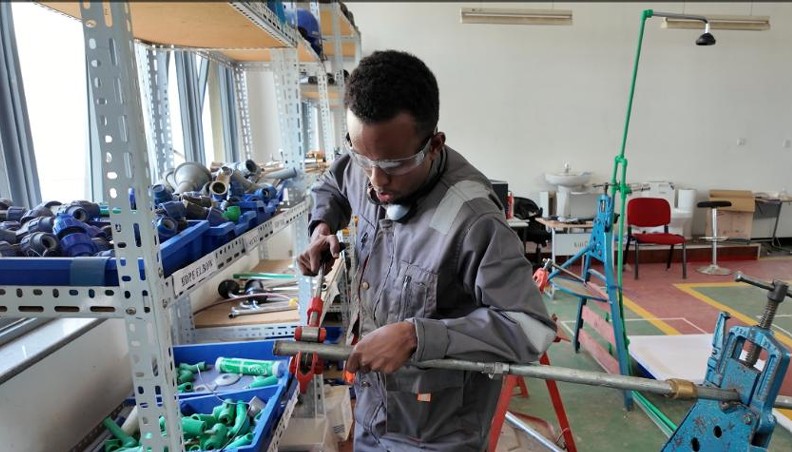
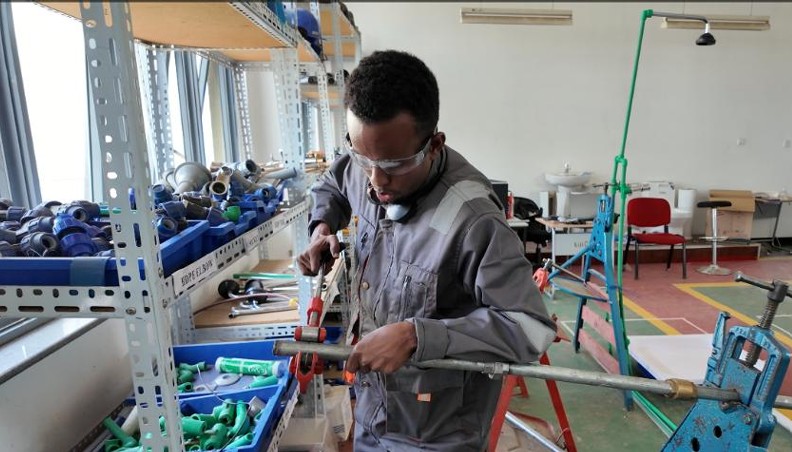
A dedicated module covered the installation of PPR pipes for both hot and cold water supply lines. Trainees practiced measuring, cutting, and preparing PPR pipes, then used fusion welding machines and correct heating times to join pipes and fittings such as elbows, tees, reducers, and unions. Special attention was given to routing hot and cold lines separately, avoiding unnecessary bends, allowing for expansion, and testing joints for leaks after installation.
Installation of HDPE, PPR, and GI Water Pipes
The workshop also introduced a mixed system using HDPE, PPR, and GI pipes, to reflect real site conditions where different materials are often combined. HDPE lines were used for underground and external connections, PPR for internal hot and cold distribution, and GI pipes for sections that required higher mechanical strength or specific connections to existing infrastructure. Trainees learned methods of joining HDPE (compression fittings), threading or using unions on GI, and using appropriate transition fittings when connecting HDPE and GI or PPR and HDPE, with pressure testing at the end.
Installation of sanitary systems with PVC and uPVC
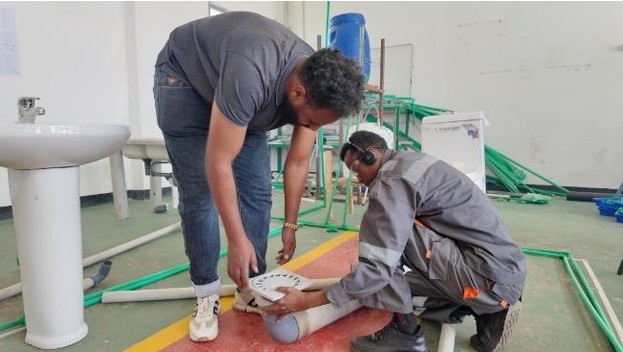
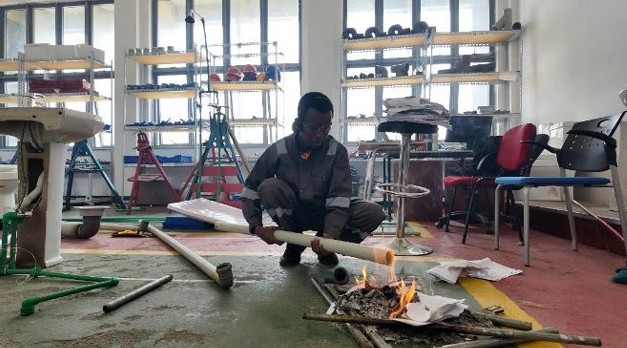
For the sanitary side, PVC and uPVC pipes were used to construct drainage and waste lines from basins, sinks, showers, and WCs to inspection chambers and final treatment or disposal points. The module covered trap selection (P-trap, S-trap), correct slope for horizontal runs, provision of cleanouts, use of proper solvent cement, and support spacing to avoid sagging. The system was designed to separate greywater from kitchen and bathroom from blackwater, so that treated greywater could be reused for watering plants or flushing.
Installation of Plumbing Fixtures
Once the pipe networks were in place, trainees installed plumbing fixtures such as wash basins, sinks, WCs, showers, taps, valves, and floor drains according to the SketchUp design. Alignment, correct mounting height, sealing around fixtures, and accessibility for maintenance were all discussed and checked during assessment. Each fixture was connected to both the water supply and the appropriate drain line, and then tested under flow conditions to check for leaks and proper functioning.
Plumbing Terminologies Introduced
The training introduced and repeatedly used common plumbing terminologies so that trainees could communicate like technicians on site. Terms such as main line, branch line, riser, manifold, trap, vent, cleanout, valve types, reducer, union, elbow, tee, coupling, and inspection chamber were used in design discussions and in the workshop. Understanding these terminologies helped participants read drawings, follow specifications, and prepare technical documentation for the final project.
Plumbing Terminologies Introduced
General plumbing guidelines and basic code principles were introduced to connect workshop practice with professional standards. These included ideas such as providing adequate pipe support, maintaining required slopes for drainage, protecting pipes from corrosion and mechanical damage, preventing cross-connection between potable and non-potable water, and using approved materials and fittings. Simple references to national and international plumbing norms were discussed so that trainees understood that every installation should respect health, safety, and environmental protection requirements.
BoQ Preparation for The Final Project
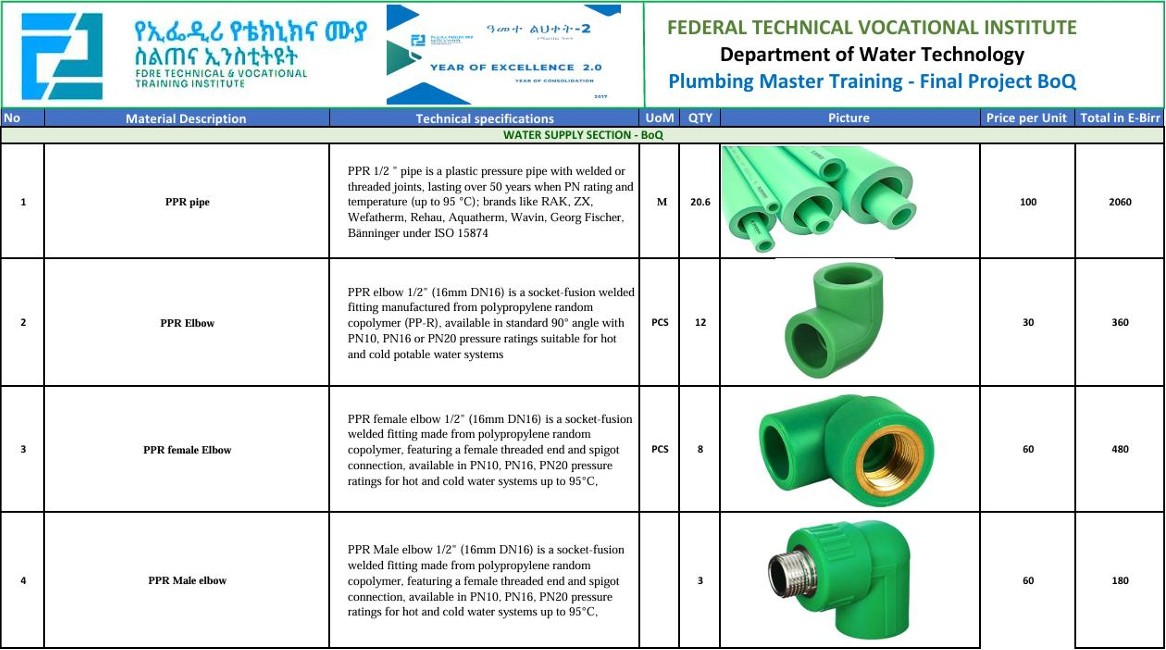
At the end of the training, the team prepared a Bill of Quantities (BoQ) for the plumbing and sanitary project that had been designed and installed. The BoQ listed all pipes, fittings, fixtures, valves, supports, and accessories with sizes, units, and quantities, giving a realistic picture of the materials needed and their cost implications. Preparing the BoQ helped trainees see the link between careful design, accurate take-off from drawings, and budgeting for real construction projects.
Final Project Procedure and Concept
The final project brought together all these elements into one integrated system that demonstrates a full water cycle inside a campus building. The procedure started with designing the system in SketchUp, then installing raw water storage, pumps, elevated tanks, hot and cold PPR distribution lines, HDPE and GI connections, sanitary PVC/uPVC drains, and finally greywater treatment and reuse lines that return treated water for irrigation and flushing while surplus rainwater is directed to a recharge structure. Through this step-by-step process, trainees experienced how good plumbing design supports water efficiency, environmental protection, and sustainability in practice.
Acknowledgements
This 21-day training would not have been possible without the strong support and guidance of the FDRE TVET Institute team in Addis Ababa. Special thanks go to Eng. Abraham and Eng. Dewit for their patient teaching, hands-on supervision in both the computer lab and workshop, and continuous encouragement during every stage of the project. Sincere appreciation is also extended to GSA Project Coordinator Mohamed Mayow for coordinating the programme and creating the opportunity to link Somali trainees with Ethiopian TVET expertise in plumbing and sanitary.


An inspiring article that showcases the practical learning journey from design to installation at the FDRE Technical Institute in Addis Ababa. It highlights the value of hands-on training, technical innovation, and skill development in shaping future professionals.
Abdirisak Tarabi